
Russian satellite Cosmos 2612 makes close approach to US-owned imaging satellite
Russia's Cosmos 2612 came within roughly three miles of the US-owned ICEYE-X36 imaging satellite on Friday, a manoeuvre LeoLabs calls deliberate but of uncertain intent.
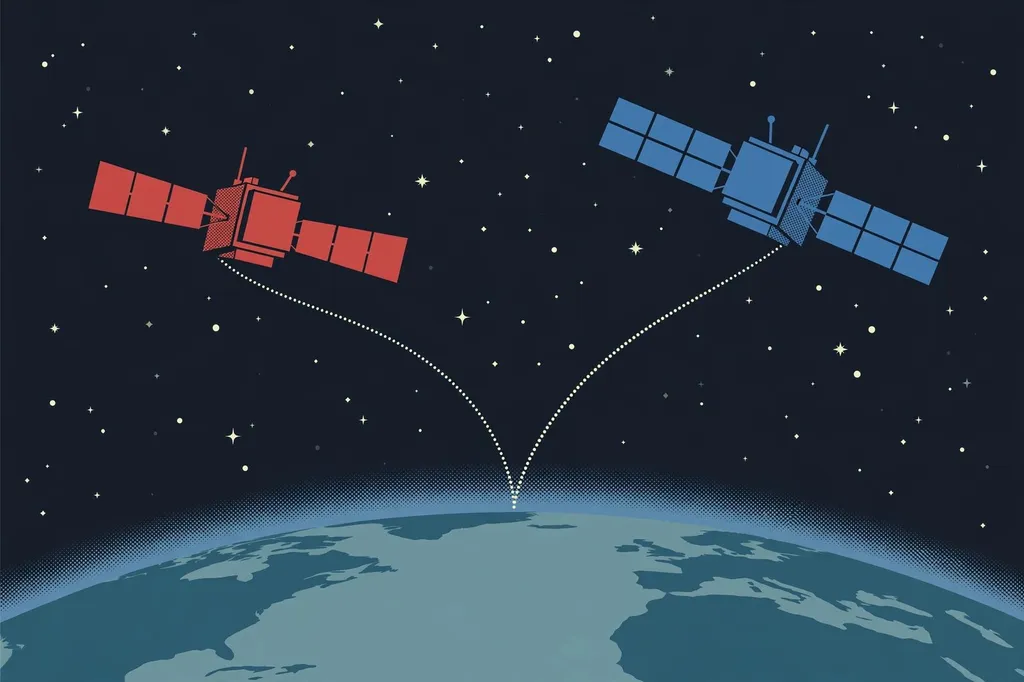
Russia’s Cosmos 2612 military satellite made a deliberate close approach to ICEYE-X36, a US-owned commercial imaging satellite, on Friday, coming within roughly three miles — about five kilometres — according to LeoLabs tracking data (Axios).
The two were more than 200 miles apart a day earlier. LeoLabs said the path “appears to be a deliberate approach toward” the US-owned spacecraft — “relatively uncommon” in low Earth orbit, where objects travel at around 17,000 mph.
ICEYE is founded in Finland, though tracking sites tie the satellite to ICEYE US. The US Defense Department and ICEYE declined to comment. A Ukrainian official told Axios the military works with ICEYE, though it was unclear whether this specific satellite supports Ukraine; the official said the military had been informed of similar manoeuvres in spring and summer. In January, ICEYE announced an agreement with “a customer within the Ministry of Defence of Ukraine” to “expand their cooperation in space-based intelligence”.
The approach fits a pattern: Russia launched six Cosmos satellites (2609–2614) in April 2026, five of which made inclination-matching manoeuvres a month later, and several approached a “Western commercial radar satellite used by Ukraine for imagery intelligence” in May, per the US Space Force (CSIS). From 30 September, Cosmos 2612 manoeuvred back into coplanar alignment at nearly the same altitude, CSIS notes.
Analysts at Integrity ISR called the approach “striking distance” — their assessment, not evidence of intent. Russia has not attacked, jammed, or interfered, and intent remains explicitly uncertain (Times Now News).
More on this topic: all Satellite Internet stories