

NASA fires up RS-25 engine in full-duration test for future Artemis missions
NASA has hot-fired RS-25 engine No. 10001 for a full 500 seconds at Stennis Space Center, acceptance-testing flight components for future Artemis missions.
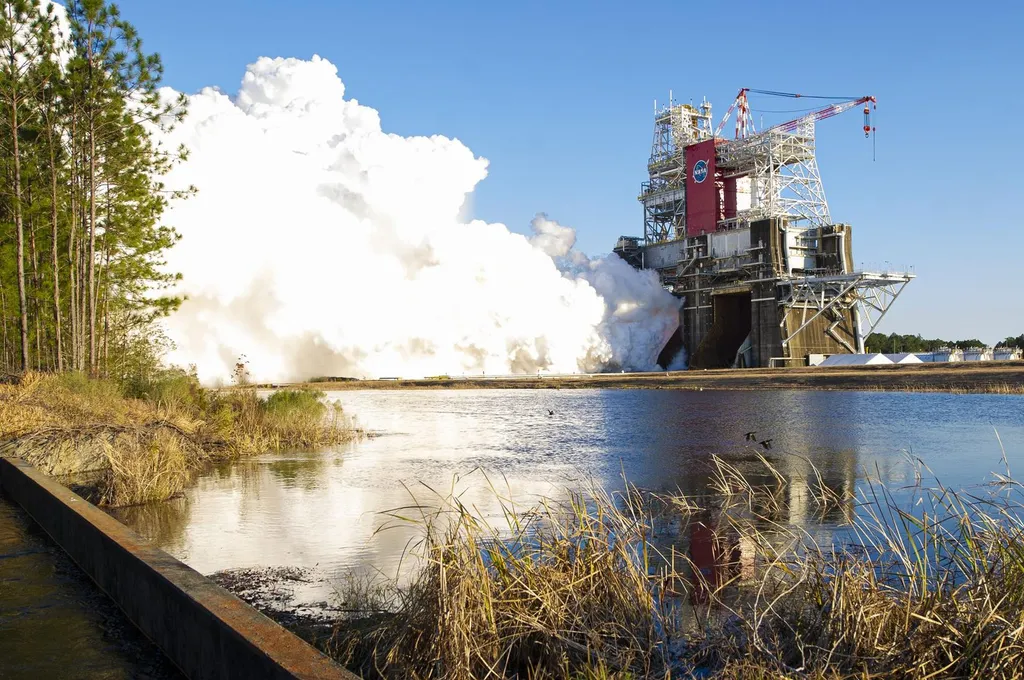
NASA has fired RS-25 engine No. 10001 for almost eight and a half minutes at the agency’s Stennis Space Center near Bay St. Louis, Mississippi, in a full-duration test of flight components destined for future Artemis missions.
The hot fire took place on 21 October on the Fred Haise Test Stand, NASA said. Test teams ran the developmental engine for 500 seconds — the same length of time RS-25 engines fire during an actual launch of the Space Launch System rocket — and pushed it to 111 per cent power, matching the thrust required for new production engines to send the SLS rocket and Orion spacecraft into orbit.
The test had two main objectives: acceptance-testing RS-25 flight components for future Artemis missions and validating the new thermal protection system, which shields the RS-25 nozzle from the thermal environment around SLS during launch.
Engine No. 10001 itself will never fly, but the data is valuable. “The hot fire test provides NASA and NASA’s prime contractor L3Harris Technologies with the capability to capture critical data to improve engine performance and reliability,” the agency said. Operators from NASA, L3Harris and Nova Space Solutions conducted the firing.
Four RS-25 engines produce up to two million pounds of combined thrust for each SLS launch, and every engine must be proven flightworthy at Stennis before use.
Sources: NASA, “NASA Conducts RS-25 Engine Test in Support of Future Artemis Missions” (https://www.nasa.gov/image-article/rs-25-engine-test-in-support-of-future-artemis-missions/); NASA news release on the modernised RS-25 engine testing programme (https://www.nasa.gov/news-release/nasa-aerojet-rocketdyne-complete-testing-for-modernized-rs-25-engine/).
More on this topic: all Science stories