
NASA advances nuclear power module for SR-1 Freedom Mars mission
NASA and its partners have agreed key contract actions to advance the nuclear power module for SR-1 Freedom, the first fission-powered spacecraft set to travel beyond Earth's orbit, ahead of a late-2028 Mars launch.
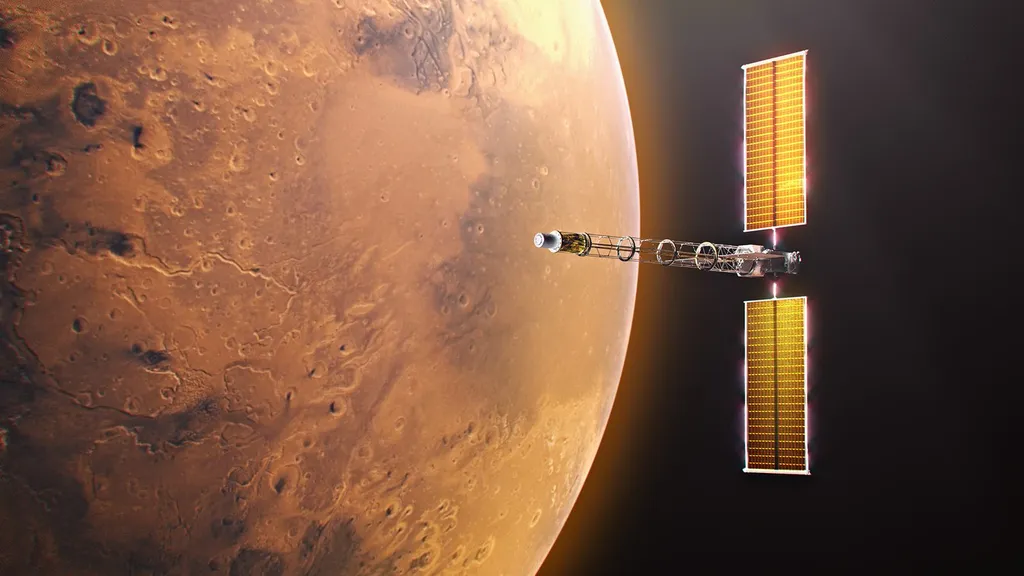
NASA has moved its first nuclear-powered deep-space mission forward, saying it and its partners have “mutually agreed to key contract actions” to advance the nuclear power module of Space Reactor-1 (SR-1) Freedom — described as humanity’s first fission-powered spacecraft to travel outside Earth’s orbit.
The 20 October announcement confirms Sierra Lobo Inc. will provide the module’s closed Brayton cycle power conversion system, which turns heat from the onboard fission reactor into the electricity needed for the mission’s nuclear electric propulsion demonstration. The fission reactor itself is being developed by the US Department of Energy’s Idaho National Laboratory. The work falls under the Space Flight Systems Development and Operations Contract III, awarded in 2024, supporting hardware design, development, testing and operations at NASA’s Glenn Research Center in Cleveland, Ohio. “These contract actions not only reduce technical risk and help us maintain momentum toward our 2028 launch, but they also strengthen collaboration across our partners,” said SR-1 Freedom programme director Steve Sinacore.
The spacecraft is targeting a late-2028 launch toward Mars carrying the SkyFall science mission — three helicopters evolved from NASA’s Ingenuity design that will collect scientific data, demonstrate exploration capabilities and identify potential water sources. NASA announced the mission at its “Ignition” event in March 2026.
Safety measures include interagency reviews, regulatory compliance and hazard assessments, and the reactor will remain inactive until the spacecraft has left Earth orbit.
Sources: NASA (20 Oct 2026), EconoTimes (21 Oct 2026), The New Indian Express (21 Oct 2026)
More on this topic: all Science stories