

EU to give Frontex new powers to deport migrants from outside Europe
The EU's border agency Frontex is set to gain powers to return irregular migrants from one non-EU country to another, under reforms the European Commission will unveil on Tuesday.
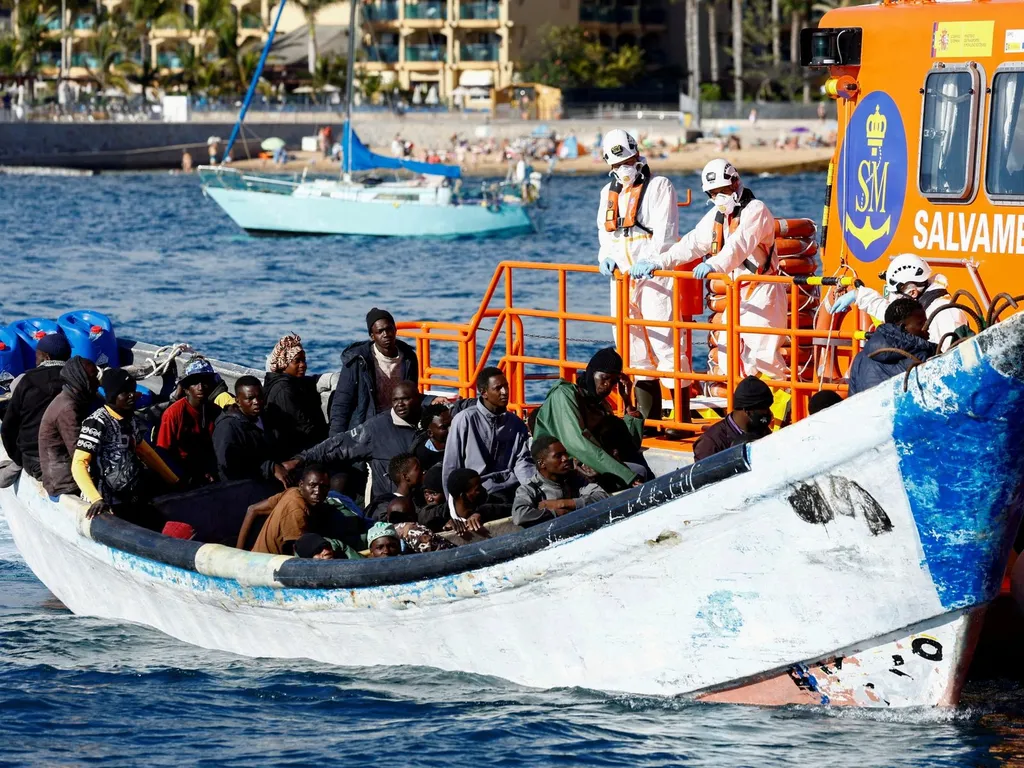
Frontex is set to gain powers to return irregular migrants from one non-EU country to another, Euronews reports exclusively, citing anonymous EU officials. The Commission unveils the reforms on Tuesday 27 October, presented by Vice-President for Security Henna Virkkunen and Home Affairs Commissioner Magnus Brunner after the weekly College meeting.
Currently Frontex helps national authorities return migrants from EU countries to origin countries and patrols external borders and coastlines. Under the new rules it will also help third-country authorities, such as North African governments, return Central African citizens home before they reach Europe. “The more people you return before [they reach Europe], the less you have to return after,” an EU official told Euronews.
Frontex may also join deportations from return hubs, which a recently approved law lets EU countries establish in third countries; five EU governments are negotiating the first hub, expected operational in 2027. The reform also adds a rapid-response force and an online surveillance unit monitoring social media, aiming to avoid a repeat of last July’s mass entry into Ceuta, when around 90,000 migrants forced their way across the Morocco–Spanish exclave border, per Euronews.
Cooperation with any third country requires a specific agreement, like status agreements already with Albania, Serbia and North Macedonia; the EU is negotiating one with Senegal, whose Frontex liaison officer — also covering Mauritania and Gambia — was appointed in 2023 under informal working arrangements. Frontex is set to receive €12 billion under the next seven-year EU budget, doubling its previous allocation, per Euronews.
Josephine Solanki, researcher at Amsterdam’s Transnational Institute, said: “It’s no longer only an agency supporting EU countries at their borders. […] It’s a deportation agency, increasingly operating far away from the actual border of the EU.” NGOs demand stronger oversight, Euronews reports, arguing the agency has already been implicated in rights violations within Europe.
Sources: Euronews exclusive via mirror; Particle News summary
More on this topic: all World stories