
Japan's MMX mission lifts off for Phobos on historic sample-return voyage
JAXA's Martian Moons eXploration probe lifted off from Tanegashima aboard an H3-24L, beginning a ten-month cruise to Mars ahead of the first-ever sample return from Phobos.
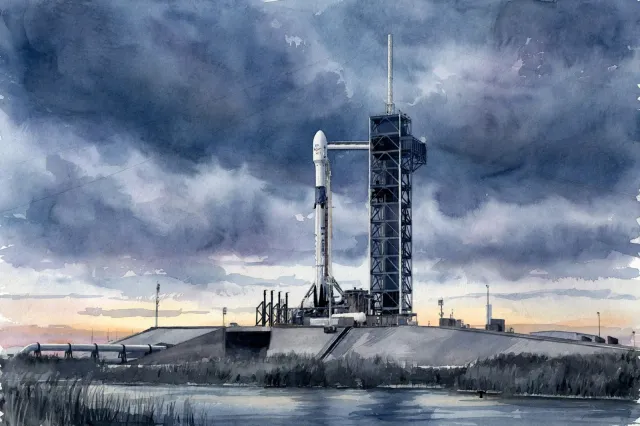
JAXA’s Martian Moons eXploration (MMX) probe lifted off at 19:41 UTC on 19 October from the LA-Y2 pad at Tanegashima’s Yoshinobu Launch Complex, starting the first sample-return attempt from a Martian moon.
It flew aboard an H3-24L — Japan’s most powerful H3 variant, 63 metres tall, with two LE-9 engines, four solid boosters and a long fairing. The H3 F10 launch reached parking orbit 10 minutes 40 seconds after liftoff, with spacecraft separation planned 1 hour 11 minutes in.
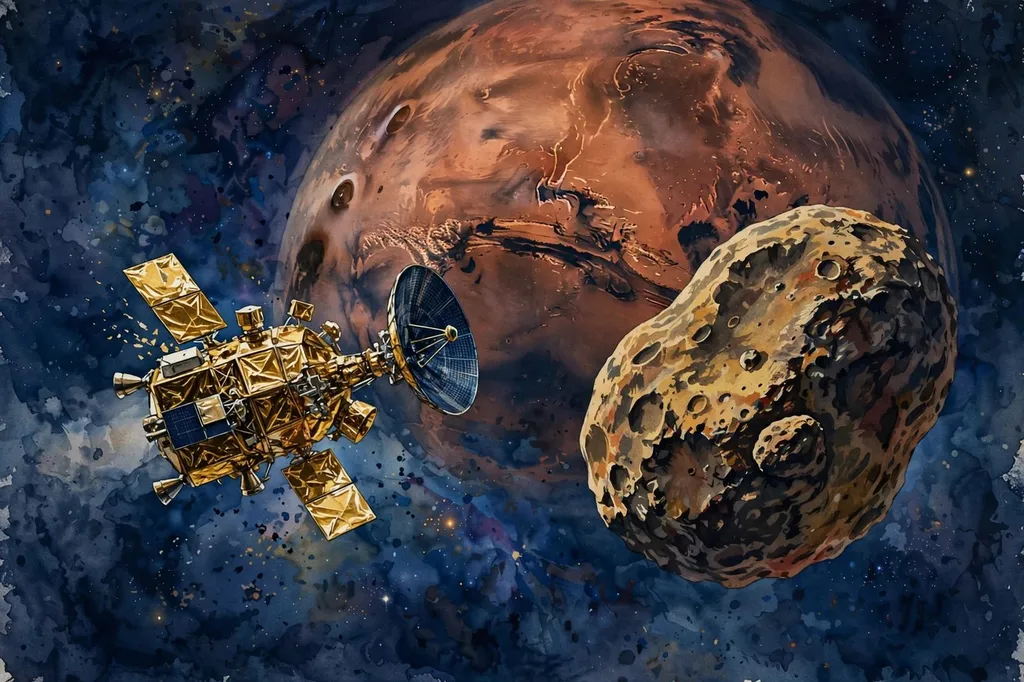
A ten-month cruise follows, reaching Mars in August 2027. MMX will survey both moons, deploy the European IDEFIX rover, and land on Phobos twice from December 2028 to collect at least 10 grams; a return capsule is due in Australia in 2031.
JAXA leads the mission with partners: NASA provides the MEGANE spectrometer, a pneumatic sampler and Deep Space Network tracking — and will curate about 15% of the returned sample — while CNES, DLR and ESA contribute instruments and support. The samples should settle whether the moons are captured asteroids or impact debris.
“Despite their potential importance, Martian moons have never been fully investigated. They are known as the most important unclimbed mountains in the solar system,” said MMX project manager Yasuhiro Kawakatsu, via the Associated Press. “This is kind of like one of the major outstanding mysteries of solar system formation, the origin of Phobos and Deimos, so we really do need a mission like MMX to figure this out,” said NASA’s Dr Daniel Glavin.
More on this topic: all Satellite Internet stories